Traceability is manual or paper-based
Case Study

AgroTraceNG
End-to-End Agricultural Traceability & Compliance System
Forged by Anvil. Built for trust in the supply chain.
Currently in Development
Development Focus
AgroTraceNG is being designed to create structured, verifiable traceability from farm origin to export readiness. The platform is evolving with supply-chain stakeholders so the workflow reflects real field conditions, regulatory realities, and trade requirements.
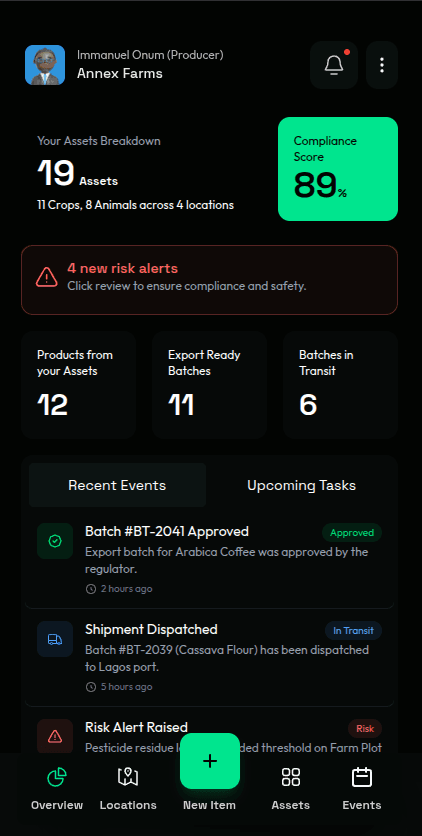
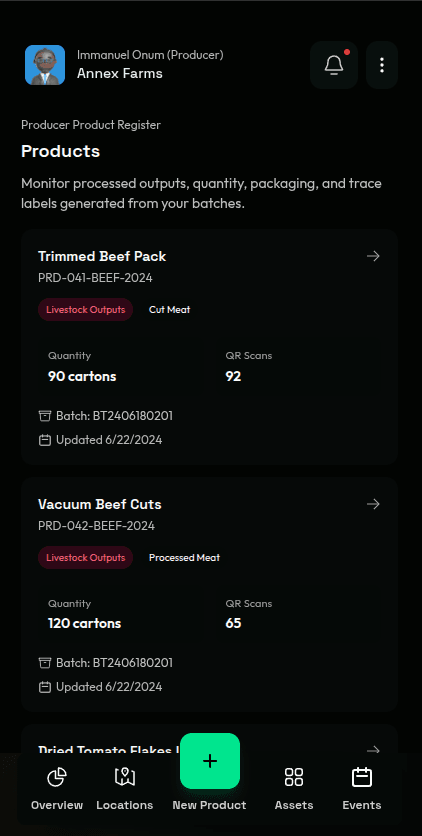
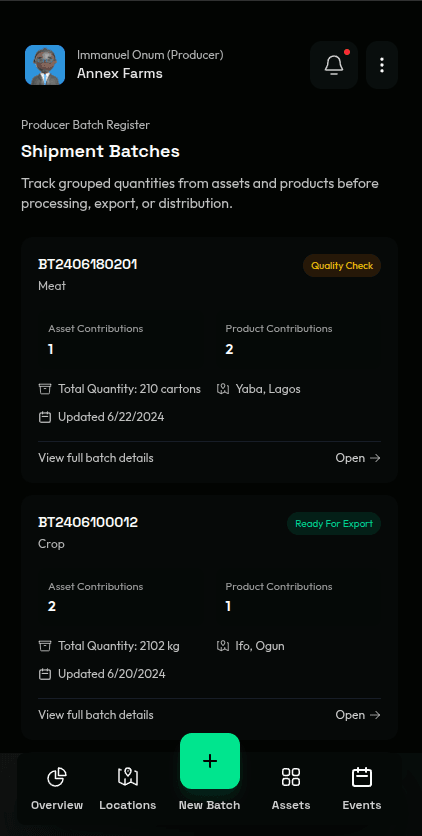
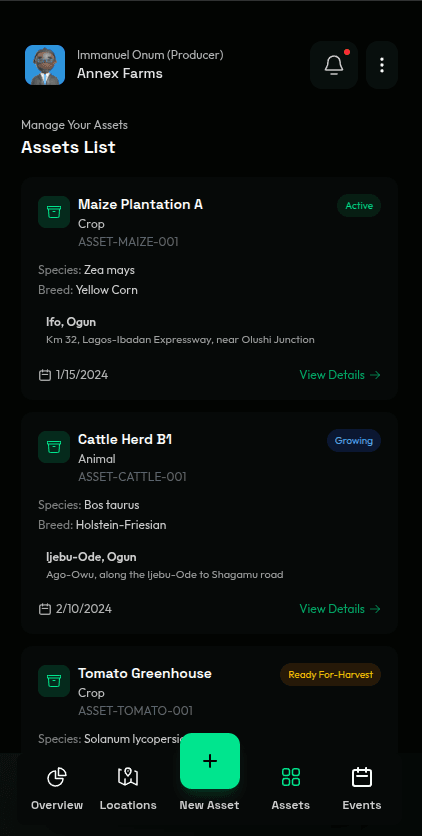
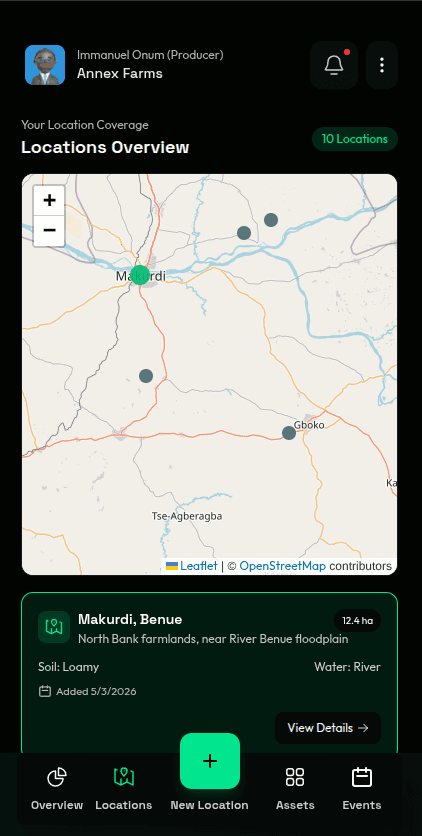
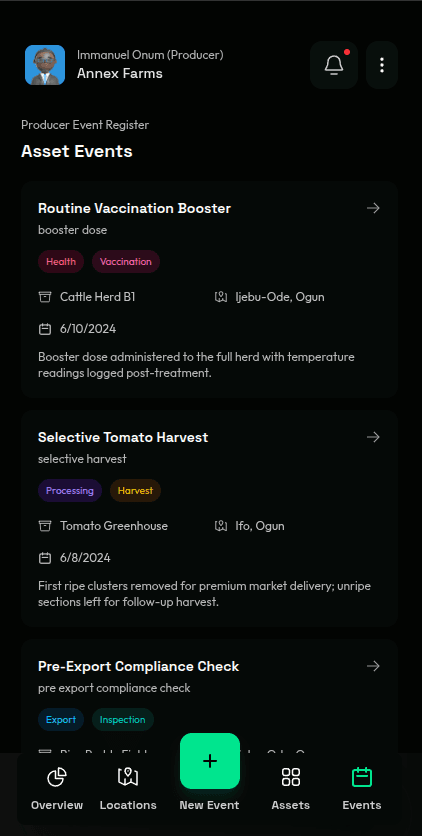
Product Screens
Explore AgroTrace workflows across the product interface.
A quick walkthrough of AgroTrace screens built to keep traceability data structured, verifiable, and easy to act on.
The Origin
Agricultural supply chains are complex, fragmented, and often undocumented.
Produce changes hands multiple times before reaching export markets, with little to no structured visibility into origin, handling, or compliance.
The result is a trust gap:
- Exporters struggle with documentation.
- Inspectors lack reliable data.
- Regulators enforce compliance retroactively.
- Buyers question provenance.
AgroTraceNG is being developed to close that gap.
The Problem
In most agricultural ecosystems, traceability remains fragmented.
Batch history is incomplete or inconsistent
Certifications are hard to verify in real time
Export readiness depends on fragmented records
Data is not standardized across stakeholders
This creates friction at every stage of trade.
The Insight
The issue wasn't lack of data.
It was lack of structured traceability infrastructure.
So we reframed the problem:
What if every agricultural batch had a digital identity from origin to export?
A system where every actor in the supply chain can contribute to a single, verifiable record.
The Solution
AgroTraceNG is being built as a traceability and compliance platform for agricultural supply chains.
Designed to bring transparency, structure, and trust to agricultural trade.
End-to-end batch tracking
Digital certification records
Export readiness verification
Compliance documentation management
Role-based access for stakeholders
How It Works
A structured flow from origin to export confidence.
Step 1
Batch Creation at Source
Every produce batch will be registered at origin with key metadata.
Step 2
Movement Tracking
Each transfer will update the batch history in sequence.
Step 3
Certification Linking
Inspection and compliance records will be attached directly to batches.
Step 4
Export Readiness
Exporters will be able to quickly assess whether a batch meets requirements.
Step 5
Verification Layer
Stakeholders will be able to validate origin and history without ambiguity.
Built For
Stakeholders across agricultural trade ecosystems.
- Farmers & Producer Groups
- Exporters
- Inspectors & Certification Bodies
- Regulatory Agencies
- Agricultural Supply Chain Operators
Key Capabilities
Built to support trustworthy, auditable trade workflows.
Traceability Graph
A complete history of every batch from origin to destination.
Compliance Records
Structured storage of inspections, certifications, and approvals.
Role-Based Access
Different stakeholders see only what they need to act on.
Audit-Friendly Architecture
Every action is recorded for accountability.
Scalable Data Model
Designed for large-scale agricultural ecosystems.
Expected Outcome
Introducing structure where there was previously fragmentation.
As AgroTraceNG progresses, it is expected to help stakeholders:
Reduce ambiguity in origin tracking
Improve export readiness confidence
Strengthen compliance processes
Build trust between buyers and producers
Digitize historically manual workflows
What We Learned
Agriculture doesn't suffer from lack of effort.
It suffers from lack of visibility.
When trust is expensive, transparency becomes infrastructure.
Next Step
AgroTraceNG is evolving into foundational infrastructure for transparent agricultural trade.
Explore how it can support your supply chain.